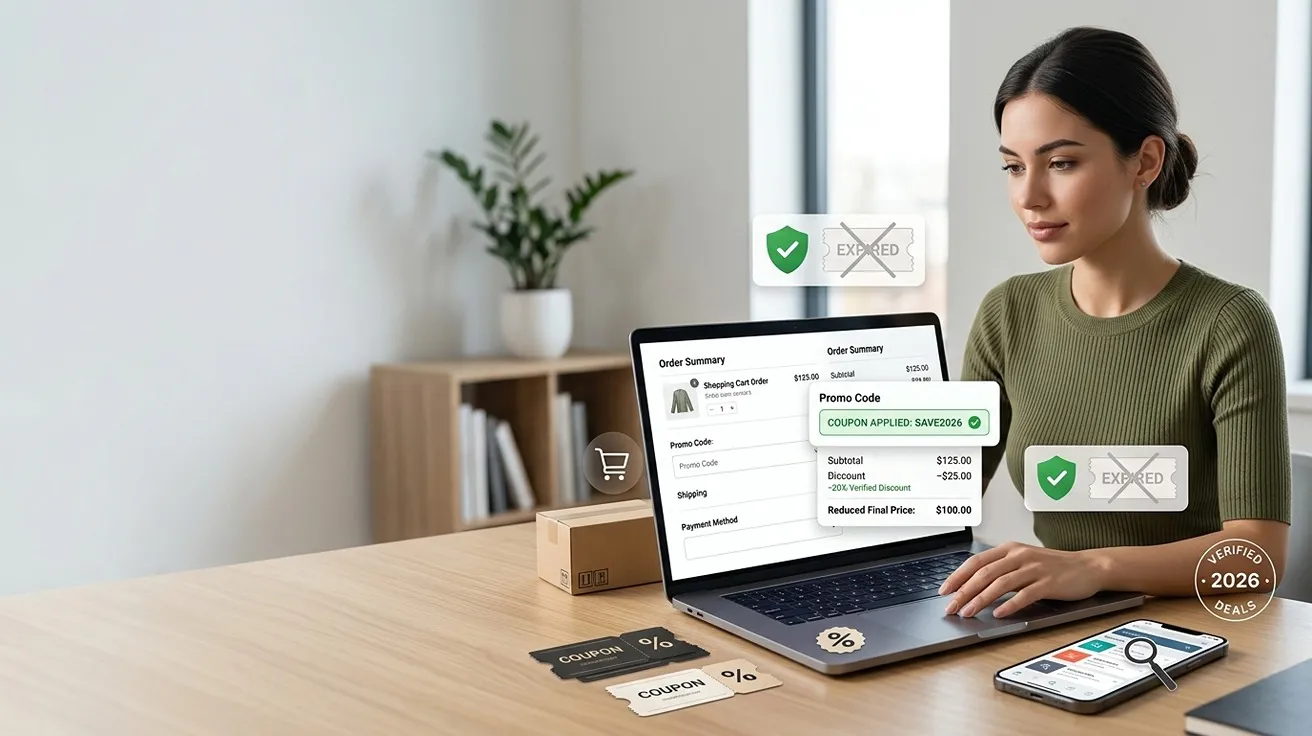
Online shopping is convenient, but paying full price for
everything can quickly become expensive. Before you complete an order, taking a
few minutes to search for a coupon code can help you reduce the total cost.
From fashion and beauty products to electronics, home essentials, and everyday
items, many online stores offer promotional codes throughout the year.
The challenge is finding a working coupon code
instead of wasting time on expired or restricted offers. In 2026, shoppers have
more places to find discounts than ever, but knowing where to look and how to
check an offer is important.
Here are some simple and practical ways to find working
coupon codes online.
Start With a Trusted Coupon Website
One of the easiest ways to search for online discounts is to
use a dedicated coupon and deals website.
Instead of visiting multiple websites and testing random
codes, you can look for offers organized by retailer, brand, or shopping
category. A good coupon platform can make it easier to compare different
promotions before making a purchase.
When checking a coupon, look for useful information such as
the discount amount, expiration date, minimum order requirements, and product
restrictions.
This can save you time and help you focus on offers that are
more likely to be useful.
Search for the Store Name and Coupon Code
If you already know which store you want to shop from, make
your search specific.
Try phrases such as:
- Store
name coupon code
- Store
name promo code 2026
- Store
name discount code
- Store
name free shipping
- Store
name first-order coupon
- Store
name deals
Adding “2026” can help you find newer content and current
promotions.
However, don't assume that the first result is the best
offer. Compare several options and check their terms before choosing one.
Check the Retailer's Website
The retailer's own website should also be one of your first
stops.
Online stores frequently promote discounts directly on their
websites. You might find a banner offering a percentage discount, free
shipping, a seasonal sale, or a special promotion for new customers.
Look around the homepage, sale section, shopping cart, and
checkout page.
Some retailers also display a promotional code after you
sign up for their email newsletter.
A store's own offer can sometimes be better than a coupon
found elsewhere.
Look for First-Order Discounts
If you are shopping from a retailer for the first time,
check whether it offers a welcome discount.
Many online stores encourage new customers to sign up by
offering:
- A
percentage discount
- A
fixed amount off
- Free
shipping
- Special
promotional pricing
- A
welcome coupon
For example, a store might offer $10 off your first order
after signing up for an account or newsletter.
If you were already planning to buy something, this can be
an easy way to lower your purchase price.
Check for Free Shipping Coupons
A coupon doesn't always have to reduce the product price.
Free shipping can be a valuable promotion, especially when
you're placing a small order.
For example, a 10% discount on a $50 order saves $5. If
shipping costs $8, a free-shipping offer could potentially provide greater
savings.
Before checking out, search for both product discounts and
shipping promotions.
Then compare the final cost rather than focusing only on the
coupon percentage.
Pay Attention to Expiration Dates
One of the most common reasons a coupon doesn't work is that
it has expired.
Old promotional codes can remain visible in search results
or on websites even after a retailer stops accepting them.
Before using a coupon, check for:
- Expiration
date
- Verification
date
- Promotion
period
- Customer
eligibility
- Product
restrictions
If an offer looks old or unclear, look for a more recent
promotion.
This can save you from trying multiple codes that are no
longer valid.
Read the Coupon's Terms
A working coupon isn't necessarily a coupon that will work
for your order.
Many promotional codes have specific conditions.
For example, a coupon might only apply when you spend $75 or
more. Another may only work on full-price products.
Common restrictions include:
Minimum purchase requirements
Selected products
Specific brands
New customers only
One use per customer
Specific payment methods
Limited-time promotions
Take a moment to read these conditions before adding the
code to your cart.
Compare Multiple Coupon Codes
Sometimes one store has several active promotions at the
same time.
You might find:
- 10%
off
- $15
off $75
- Free
shipping
- 20%
off selected products
- First-order
discount
The largest percentage isn't automatically the best choice.
For a small order, free shipping might save more. For a
larger order, a percentage discount could provide greater savings.
Compare the final prices whenever possible.
Check Student and Membership Discounts
Students and loyalty-program members may have access to
special offers.
If you qualify for a student discount, check whether the
retailer provides one before using a standard coupon.
Loyalty programs can also offer benefits such as:
- Exclusive
coupons
- Reward
points
- Member-only
prices
- Birthday
discounts
- Free
shipping
- Early
sale access
If you frequently shop from the same retailer, these
programs may provide useful savings over time.
Look at the Retailer's App
Some stores provide exclusive deals through their mobile
apps.
An app may include special coupons, personalized promotions,
or member offers that aren't prominently displayed on the main website.
If you regularly shop from a particular retailer, checking its
app before completing an order can be worthwhile.
Just make sure you understand the promotion's conditions
before using it.
Use Coupons During Seasonal Sales
Major shopping seasons can be a good time to search for
promotional codes.
Retailers often launch special campaigns around events such
as:
- Back-to-school
season
- End-of-summer
sales
- Black
Friday
- Cyber
Monday
- Holiday
shopping
- New
Year sales
- Seasonal
clearance events
During these periods, you may find sale prices combined with
additional coupons or free-shipping promotions.
However, always compare prices. A seasonal “deal” isn't
automatically the cheapest option.
Don't Ignore Small Discounts
It's easy to focus on coupons offering 30%, 40%, or 50% off.
But smaller discounts can also add up.
A $5 saving on one purchase, free shipping on another, and a
$10 coupon on a larger order can make a noticeable difference over time.
If you're already planning to buy something, there's no
reason to ignore a legitimate small discount simply because it isn't huge.
The goal is to consistently pay less, not to find a massive
coupon every time.
Check the Coupon at Checkout
After entering your code, make sure the discount actually
appears.
Don't assume that the code worked simply because you entered
it successfully.
Look for a change in your order summary, such as:
Original total: $100
Coupon discount: -$15
New total: $85
If the total hasn't changed, check whether the code is valid
for your products.
You can then try another eligible offer if necessary.
Compare the Final Checkout Price
This is perhaps the most important coupon-shopping habit.
Always compare the complete cost, including:
- Product
price
- Sale
discount
- Coupon
discount
- Shipping
- Taxes
- Additional
fees
A 20% coupon may sound better than a 10% coupon, but if the
20% offer has expensive shipping or product restrictions, the 10% offer may
actually be cheaper.
The final checkout price tells you whether you're
genuinely getting a better deal.
Don't Buy Something Just Because You Have a Coupon
A coupon should help you save money, not encourage
unnecessary spending.
Suppose you find a $20 coupon but need to spend $100 to use
it. If you only planned to spend $60, increasing your order just to unlock the
discount may not make financial sense.
Before buying, ask yourself:
“Would I purchase this product without the coupon?”
If the answer is no, consider skipping the purchase.
A discount on something you don't need isn't a real saving.
Be Careful With Unclear Coupon Sources
Not every coupon website or promotional code you see online
is reliable.
When searching for deals, use sources that clearly explain
the offer and provide useful information about its conditions.
Be cautious if a website:
- Makes
unrealistic savings claims
- Doesn't
explain the offer
- Provides
no useful coupon details
- Redirects
you through suspicious pages
- Requests
unnecessary personal information
A good coupon experience should be simple and transparent.
Create a Simple Coupon Routine
You don't need to spend hours searching for discounts.
Before completing an online purchase, follow this quick
routine:
1. Find the product you want.
2. Check the retailer's current sale.
3. Search for a current coupon code.
4. Check the coupon requirements.
5. Compare other available promotions.
6. Look for free shipping.
7. Apply the best eligible offer.
8. Check the final checkout total.
This simple process can help you find better prices without
making shopping complicated.
Final Thoughts
Finding working coupon codes online in 2026 is all about
being patient, comparing offers, and checking the details before you buy. Start
with trusted coupon sources, check the retailer's own promotions, look for free
shipping and first-order offers, and always read the terms of a coupon before
using it. Most importantly, don't buy unnecessary products simply because a
discount is available. If you're looking for current coupon codes, promo
codes, deals, and promotions, visit Coupanel before your
next online purchase and make checking for savings a regular part of your
shopping routine.